August 10, 2026
How to Pack a Fragile Item So It Survives Shipping: A Step-by-Step Guide
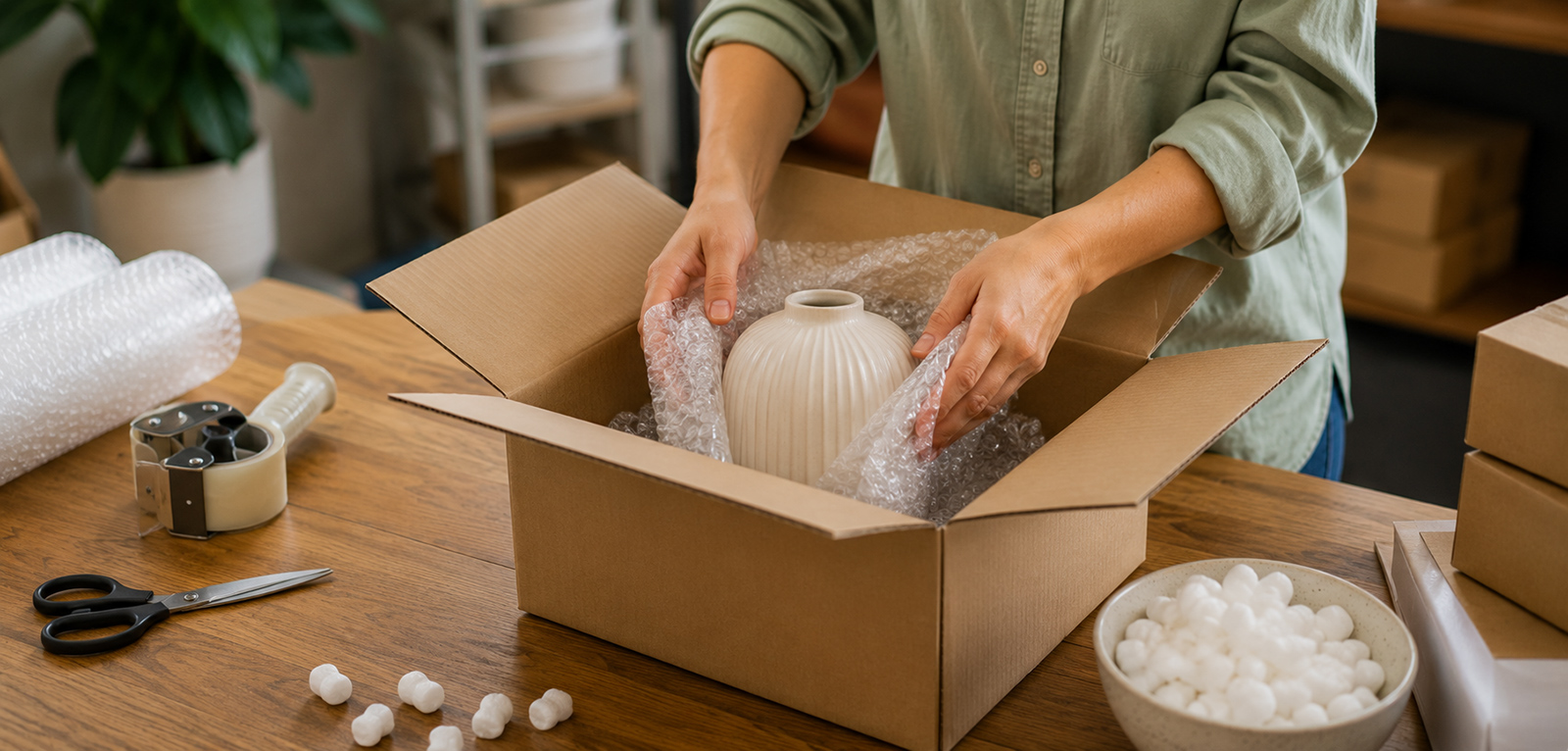

To pack a fragile item so it survives shipping, wrap it individually in bubble wrap, surround it with at least 2 inches of cushioning on every side inside a sturdy box, immobilize it so it can’t shift, and seal the box with reinforced tape. For especially delicate or valuable items, use the double-box method — a cushioned inner box placed inside a larger outer box. The single most common cause of shipping damage is empty space that lets an item move during transit, so the goal of good packing is simple: nothing inside the box should be able to budge.
Here’s exactly how to do it.
You can pick up packing supplies — boxes in a range of sizes, tubes, envelopes, tape, and bubble wrap — at your local PostNet, or skip the guesswork entirely with our custom packing service.
For high-value, breakable, or irreplaceable items — glassware, ceramics, electronics, artwork — double-boxing is the gold standard. Pack the item in a cushioned inner box as described above, then place that box inside a larger outer box with at least 3 inches of cushioning on all sides between the two. This creates a shock-absorbing buffer that protects against drops and rough handling.
Artwork and jewelry: Shipping valuable artwork or jewelry? Bring it to your local PostNet. Our team will professionally pack or inspect your shipment so it qualifies for InsureShield® Shipping Protection.
Framed art and mirrors: Tape an “X” across the glass to contain shards if it breaks, wrap in foam, add cardboard corner protectors, and ship flat or on edge in a snug box.
Liquids: Seal the cap with tape, place the bottle in a sealed plastic bag, and cushion it upright. Check carrier restrictions before shipping any liquid.
Electronics: Use the original packaging if you have it. If not, wrap snugly, immobilize cords and accessories separately, and double-box.
Multiple items in one box: Wrap each piece individually and add a layer of cushioning between them so they never touch.
Even perfectly packed shipments can still be damaged or lost in transit. For valuable items, ask about InsureShield® Shipping Protection for added peace of mind against covered loss, damage, or theft. And if you’d rather leave the packing to the pros, our team packs fragile and oddly shaped items every day.
Aim for at least 2 inches of cushioning between the item and every wall of the box, and more for heavier or more delicate items. The item should be centered so it never touches a box wall. After sealing, shake the box gently — if anything shifts, there isn’t enough fill. The principle is that movement causes damage, so the goal is to immobilize the item completely inside well-cushioned space.
Use the double-box method: pack the item in a cushioned inner box, then place that inside a larger outer box with at least 3 inches of cushioning between the two. This absorbs shocks from drops and rough handling far better than a single box. For valuable items, also consider added shipping protection so the contents are covered, and ask your local PostNet about professional custom packing for the safest result.
It’s not recommended. Corrugated boxes lose strength each time they’re used and can lose up to half their rigidity, which makes them more likely to crush or burst in transit. For fragile items, start with a new, sturdy box sized to leave room for cushioning. If you only have used boxes on hand, the double-box method with a strong outer box is a safer fallback.
Use reinforced or pressure-sensitive packing tape at least 2 inches wide. Avoid masking tape, cellophane tape, and duct tape, which don’t hold reliably in transit. Seal the box using the H-taping method — the center seam plus both edge seams on the top and bottom — to reinforce the seams most likely to fail under pressure.
If it’s fragile, valuable, or just awkward to box, bring it in. Your neighborhood PostNet stocks the right supplies and offers professional custom packing designed to get your item there in one piece.
Related reading: How Long Does Shipping Really Take? Delivery Times by Carrier · Packing & Shipping Services · Protect Yourself: Top Shipping Scams to Avoid
All PostNet locations are independently owned and operated. Services and supplies may vary by location.



 Back to Top


