November 2, 2026
How Do You Pack Something Fragile So It Actually Arrives Safely?


To pack a fragile item for shipping, use a sturdy box with enough room for protective cushioning, wrap fragile pieces individually, fill empty space so the contents cannot shift, seal the box securely with packaging tape and make sure the shipping label is clearly visible.
The goal is not simply to surround the item with packing material. It is to protect the item from impact, keep it away from the sides of the box and prevent it from moving during handling and transportation.
No packing method can guarantee that an item will arrive without damage, but careful packaging can help protect fragile items throughout the shipping process.
The exact materials and packing method depend on what you are shipping. A framed print, ceramic mug and electronic device do not necessarily need to be packed the same way.
Start with a box that is sturdy enough for the weight of the item and large enough to leave room for cushioning.
A box that fits tightly around a breakable object may not leave enough space to protect it from impacts. On the other hand, a much larger box can leave excessive empty space that must be filled to prevent movement.
USPS recommends choosing a box with enough room for cushioning material around the contents. UPS and FedEx similarly recommend sturdy packaging with adequate room for protective material.
If you reuse a box, inspect it carefully first. A box that is crushed, torn, weakened or no longer holds its shape may not provide the same protection as a box in good condition.
Also remove or completely cover old shipping labels, barcodes and markings before using the box again.
Use enough cushioning to keep the item protected from the walls of the box and from other objects inside it.
Common protective materials can include:
Different materials serve different purposes. Some wrap the item itself, while others fill empty space or keep the contents positioned inside the box.
For especially fragile items, additional layers of protection or double-boxing may be appropriate.
Before sealing the package completely, gently move or shake the box.
If you can hear or feel the item shifting, it needs more support.
USPS specifically recommends closing and gently shaking a package to determine whether enough cushioning has been used. If the contents shift, additional cushioning should be added.
The goal is for the item to remain securely positioned rather than moving around inside the box during normal handling.
Yes, when you are packing more than one fragile item in the same box, each item should be protected from the others.
USPS packaging standards state that multiple items should be cushioned so they are protected both from one another and from external forces.
For example, if you are shipping several ceramic mugs, wrapping the group together does not prevent the mugs from making contact with each other.
Instead: wrap each item → separate the items → cushion the group → fill remaining space
Pay particular attention to handles, corners, edges and other areas that may be more vulnerable to impact.
Wrap pieces individually and prevent them from touching one another or the sides of the box. Hollow areas may also require protection depending on the item.
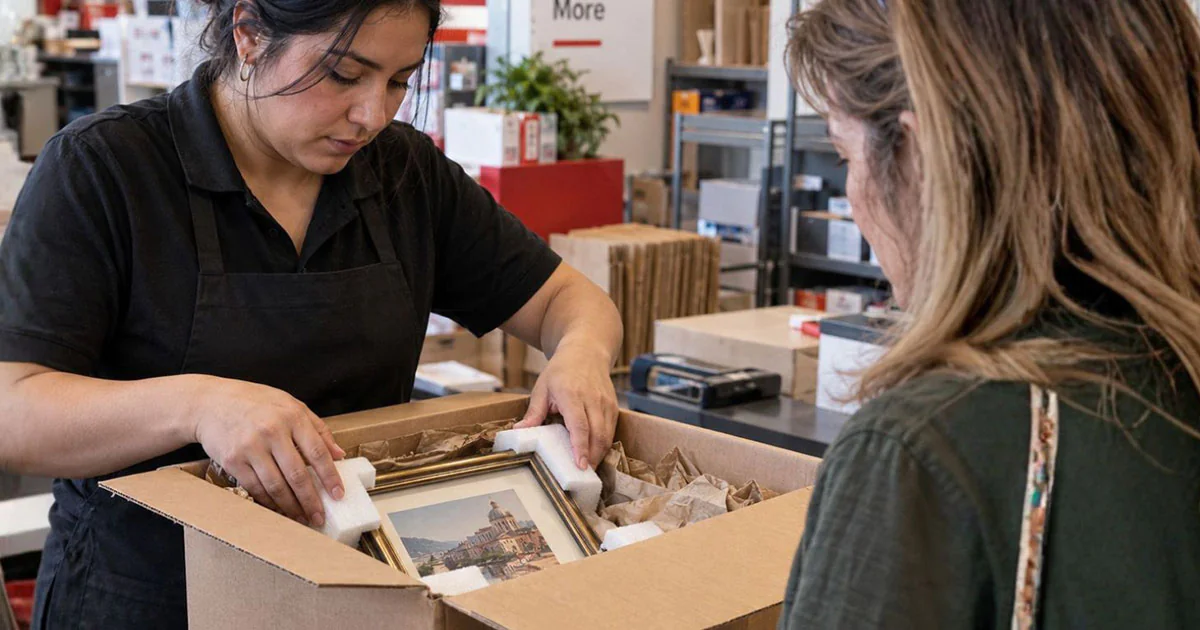
Protect the face, corners and edges of the frame. The packaging should prevent the frame from shifting and help protect vulnerable surfaces from pressure and impact.
Use packaging appropriate for the device and protect it from movement inside the box. Some electronics may have additional carrier or shipping requirements, particularly when batteries are involved, so check the applicable carrier rules before shipping.
Irregular items can create pressure points or leave large areas of empty space inside a standard box. They may require additional bracing, custom-sized packaging or another packing approach.
Wrap each piece separately and use dividers or cushioning to prevent the items from striking each other.
For an unusually valuable, delicate or difficult-to-pack item, consider having the shipment professionally packed rather than improvising.
Sometimes. Double-boxing means placing a properly cushioned inner box inside a larger outer box with additional cushioning between the two.
FedEx recommends double-boxing for fragile items in its breakables guidance, and UPS identifies a two-box method as appropriate for certain fragile goods.
It is not simply a matter of placing one loose box inside another. Both the item inside the first box and the inner box inside the second should be appropriately secured and cushioned.
Use tape intended for packaging and shipping.
USPS recommends strong packaging or paper tape and advises against using materials such as masking tape or cellophane tape to close packages. UPS similarly recommends shipping tape at least two inches wide.
Seal the openings and reinforce the seams as needed.
Place the current shipping label where it is flat, visible and easy to scan.
FedEx recommends placing the label on the largest surface of the package and avoiding placement across taped seams.
If you are reusing a box, remove or cover old labels and barcodes so they cannot be confused with the current shipment information.
USPS and UPS also recommend placing a duplicate address label inside the package with the delivery and return information.
A fragile marking can identify the contents as breakable, and USPS recommends marking packages containing fragile items accordingly.
But the marking should not replace proper packing. Think of the label as additional information about the package, not the primary protection for what is inside.
Professional packing may be worth considering when an item is:
Your local PostNet may be able to help with packing materials, custom packing and carrier options depending on the services available at that center.
Box: Is it sturdy and in good condition?
Item: Is the fragile item wrapped and protected?
Space: Is there cushioning between the item and the box?
Movement: Does anything shift when the box is gently moved?
Multiple items: Are individual pieces protected from one another?
Seams: Is the box securely closed with packaging tape?
Old labels: Have previous labels and barcodes been removed or covered?
New label: Is the shipping label flat, visible and readable?
Carrier requirements: Have you checked for any special rules that apply to the contents?
Use a sturdy box, wrap and cushion the item appropriately, keep it separated from the sides of the box, prevent movement inside the package and seal the box securely. Particularly fragile items may require additional protection or double-boxing.
Gently move the box before sealing it completely. If the item shifts noticeably inside, add or adjust the cushioning until the contents are held securely.
You can reuse a box if it remains sturdy and appropriate for the shipment. Inspect it for damage or weakness and remove or completely cover old shipping labels and markings.
When multiple fragile items are packed together, protect them individually so they cannot strike or damage one another during shipping.
No. A fragile marking identifies the package as containing breakable contents, but it does not replace appropriate internal packaging and does not guarantee damage-free delivery.
Many PostNet locations offer professional packing and shipping services, but services can vary by center. Contact your local PostNet to confirm packing options for your particular item.
All PostNet locations are independently owned and operated. Carrier options and shipping services may vary by location, and carrier deadlines are subject to change.
 Back to Top


