February 19, 2026
A Complete Guide to Wedding Stationery: From Save the Dates to the Final Thank You
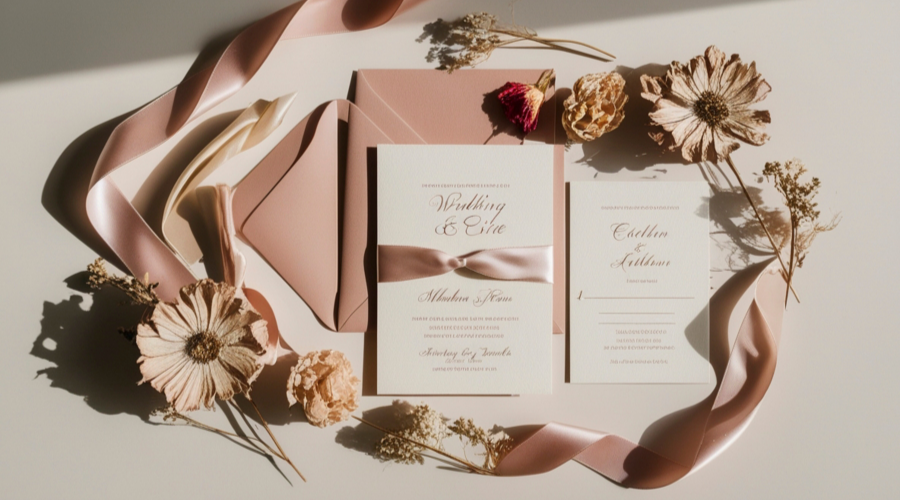

When couples start planning a wedding, stationery is often one of the first things they think about — and one of the easiest details to underestimate. Invitations, envelopes, programs, place cards, and signage all play a role in setting expectations, telling your story, and guiding guests through one of the most meaningful days of your life. Wedding stationery is more than paper. It’s often a guest’s first interaction with your wedding, and it carries through every step of the celebration, from the moment they receive your save the date to the thank-you note they open afterward.
Whether your style is classic and formal, modern and minimal, or creative and unexpected, thoughtful stationery helps bring everything together. Here’s how to approach wedding stationery holistically — including traditional pieces, creative alternatives, design considerations, and how working with a local PostNet can make the process smoother from start to finish.
Wedding stationery usually includes any printed item that shares info, sets the mood, or helps your event run smoothly. Every couple’s needs are unique, but most wedding stationery can be broken down into three phases: before, during, and after the big day. Before the wedding, couples typically use save the dates, formal invites, RSVP cards, details cards, and envelopes. These help guests get a feel for your style, share the practical details, and prepare for the celebration.
On the wedding day, stationery shifts into guidance and experience. Programs, place cards, seating charts, menus, table numbers, signage, and ceremony materials all help guests feel welcomed and informed without having to ask questions. After the celebration, thank-you cards bring everything full circle. They’re a final touchpoint that reflects your appreciation and reinforces the care you put into your wedding as a whole.
Thinking about stationery as a connected system — rather than individual pieces — helps create a more cohesive and intentional experience for your guests.
Save the dates are often the first glimpse guests get of your wedding, and they set expectations well before the invitation arrives. Traditionally, these are printed postcards or cards mailed six to twelve months in advance, especially for destination weddings or peak wedding seasons.
Today, many couples are exploring creative alternatives. Magnet save the dates are increasingly popular because they’re functional — guests stick them on the fridge and see them every day. This makes them harder to lose and easier to remember. Others opt for oversized postcards, folded cards, or even layered designs that hint at the aesthetic to come. No matter the format, the goal is the same: clearly communicate the date, location (or city), and overall feel of the event in a way that feels personal and exciting.
Wedding invitations carry the most weight when it comes to design. They’re often more formal than save the dates and include key details guests need to attend. Classic invitation suites usually include the invitation card, an RSVP card, a details card, and envelopes. But many modern couples are simplifying, opting to direct guests to a wedding website for RSVPs and accommodations while keeping the printed invitation clean and focused.
This is also where paper choice and finishes begin to matter more. Heavier cardstock, textured paper, or subtle finishes can elevate the invitation and make it feel keepsake-worthy. Couples may also choose creative formats like square invitations, layered cards, or alternative materials to stand out. The most successful invitations balance beauty with clarity — they feel special, but they’re still easy to read and understand.
Wedding-day stationery is often overlooked early in planning, but it plays a huge role in how smoothly your event unfolds. Programs guide guests through the ceremony and are especially helpful for religious or cultural traditions. Place cards and seating charts remove uncertainty and help guests settle in comfortably. Menus set expectations for the meal and add a polished touch to table settings.
Signage — welcome signs, directional signs, bar menus, or timeline displays — quietly answers questions before they’re asked. These pieces don’t need to shout to be effective; they simply need to be clear, cohesive, and thoughtfully designed. When these items share consistent fonts, colors, and materials with your invitations, they create a seamless visual experience that feels intentional and well-planned.
After the wedding, thank-you cards are the last stop on your stationery journey. They’re also super personal. Whether you write them out by hand or use a mix of printing and handwriting, thank-you cards let couples show they really care. A lot of couples pick designs that match their invitations, so everything feels connected. Others go for something simpler and more low-key, letting the message be the focus. This is another time when the paper quality really matters. A sturdy, well-made card helps make the note inside feel more sincere.
Beyond traditional formats, couples are getting creative with wedding stationery in ways that feel both practical and personal. Magnet save the dates and invitations are a standout example, offering visibility and longevity. Some couples use oversized postcards for invitations to reduce postage complexity. Others incorporate unique finishes like foil accents or spot gloss to highlight names or dates.
There’s also a growing trend toward multifunctional pieces — for example, ceremony programs that double as fans, or menus that include trivia or personal notes. These thoughtful details add charm without adding clutter. The key is choosing alternatives that align with your priorities, budget, and guest experience — not just what looks good online.
Good design starts with clarity. Before choosing fonts or colors, couples should think about what they want guests to feel. Is the wedding formal or relaxed? Traditional or modern? Intimate or celebratory?
Consistency is more important than complexity. Using the same color palette, typography, and overall style across all stationery helps everything feel connected, even if individual pieces vary in format. Readability matters just as much as aesthetics. Beautiful designs still need to communicate information clearly, especially for guests of all ages. And while it’s tempting to design everything yourself, professional guidance can help refine ideas, avoid costly mistakes, and ensure everything prints exactly as intended.
Paper choice influences how stationery feels in hand — and how it’s remembered. Standard smooth cardstock offers a clean, modern look. Textured papers like linen or cotton add softness and depth. Heavier weights feel more formal and substantial, while lighter stocks may work better for inserts or RSVP cards.
Finishes also play a role. Matte finishes feel refined and timeless. Gloss finishes add vibrancy and contrast. Spot gloss or foil accents draw attention to specific elements without overwhelming the design. The right combination depends on your style, how the piece will be used, and whether guests need to write on it.
Wedding planning involves countless decisions, deadlines, and details. Stationery doesn’t have to be one of the stressful ones. Working with a local PostNet gives couples access to design expertise, printing options, and mailing support — all in one place. Instead of coordinating multiple vendors, you can collaborate with a single partner who understands your timeline and helps keep everything organized.
From designing save the dates and invitations to printing envelopes, programs, signage, and thank-you cards, PostNet acts like an extra assistant in your wedding planning process — helping ensure everything looks cohesive, arrives on time, and feels just right.
If you’re ready to start planning your wedding stationery — or want help refining your ideas — visit your local PostNet. Our team is here to help you design, print, and mail every piece with care, so you can focus on enjoying the moments that matter most.


 Back to Top


